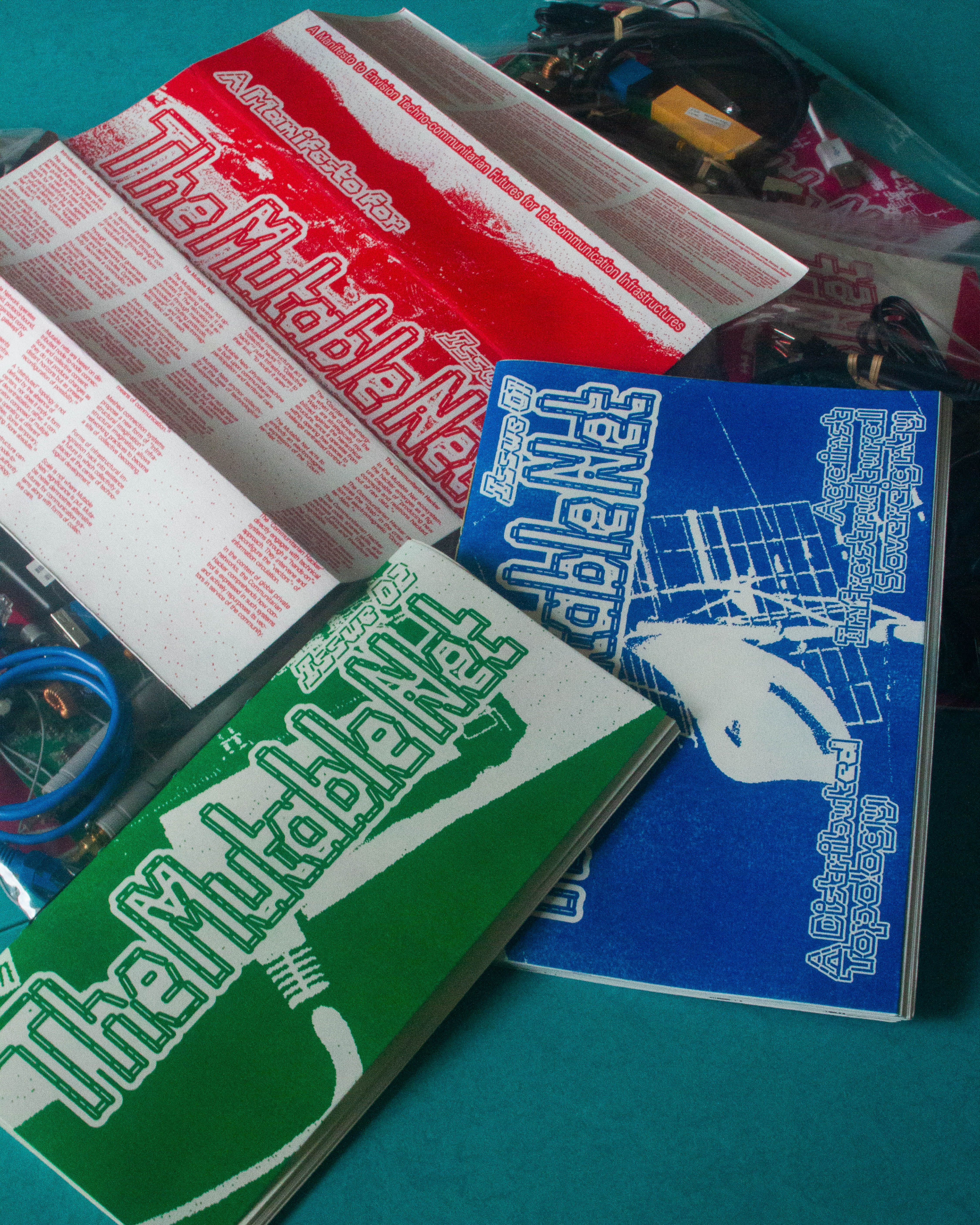
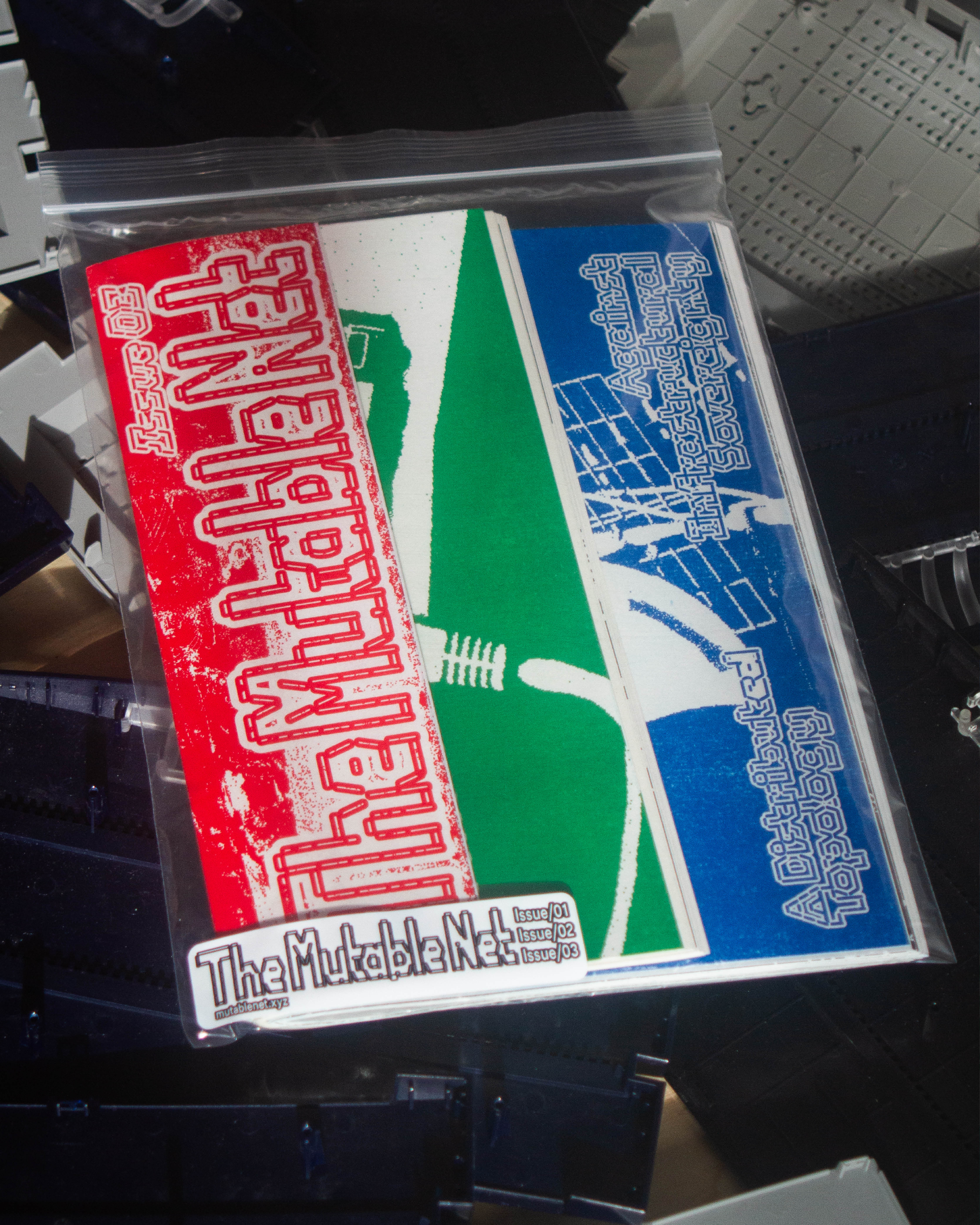
The Mutable Net Publication
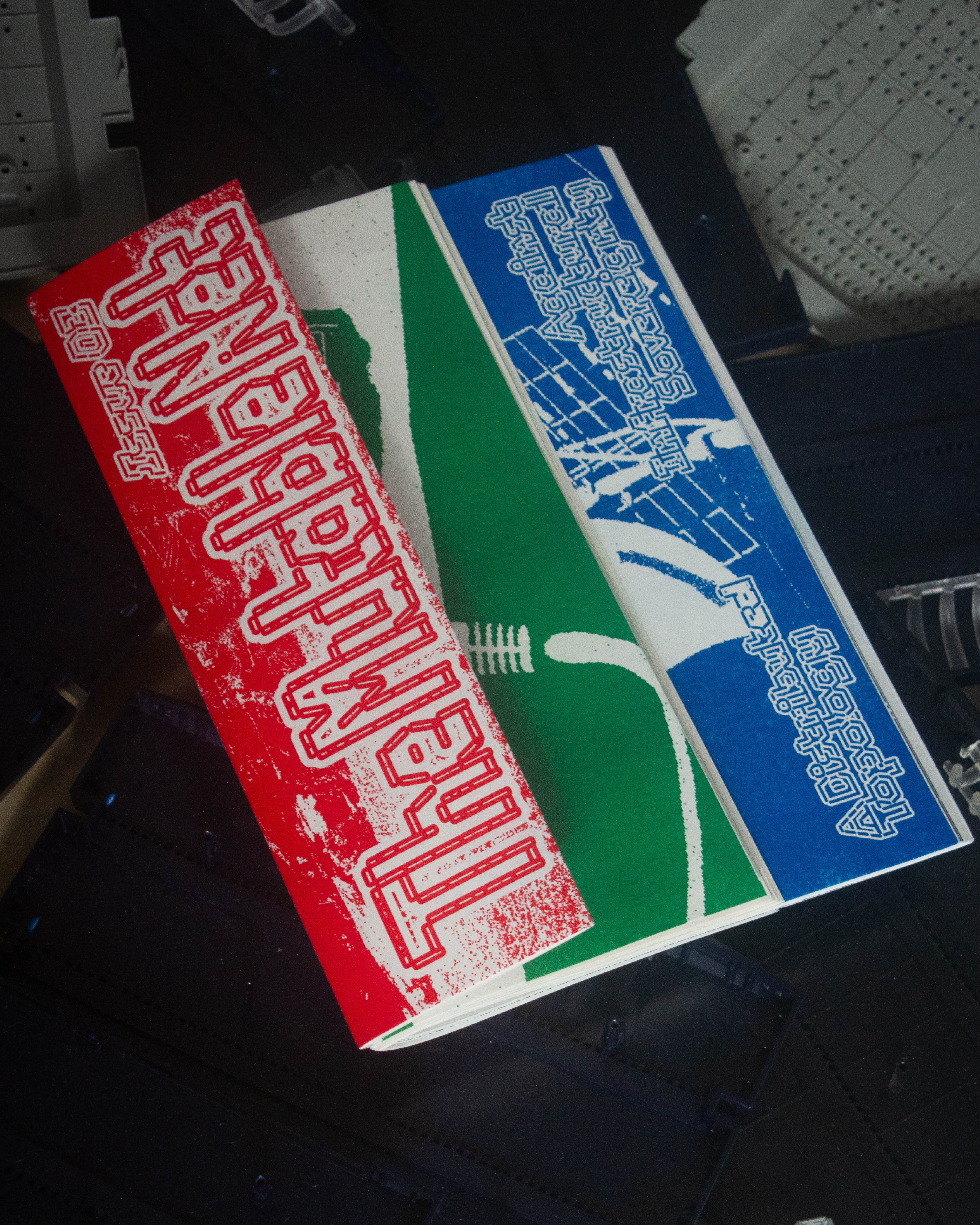
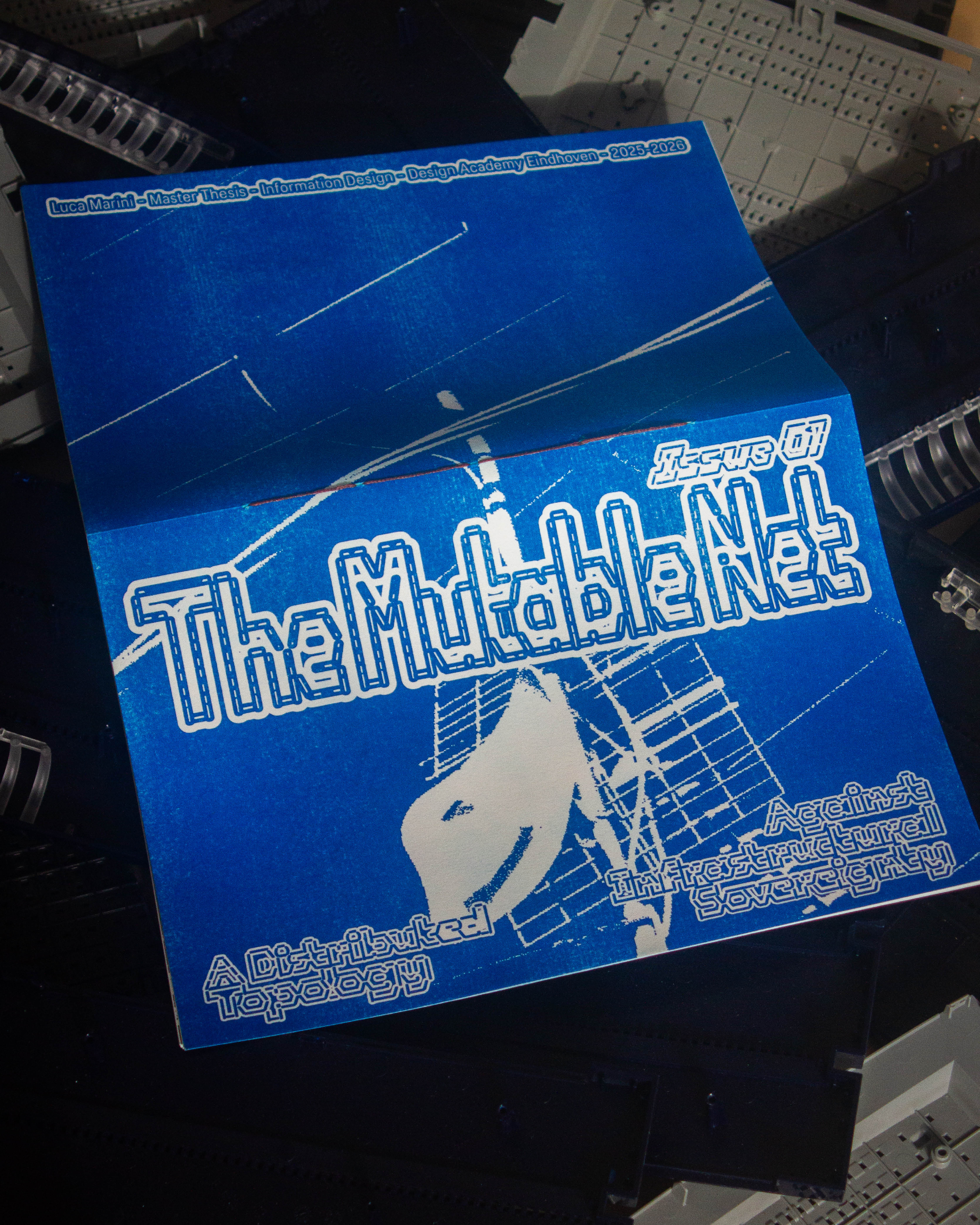
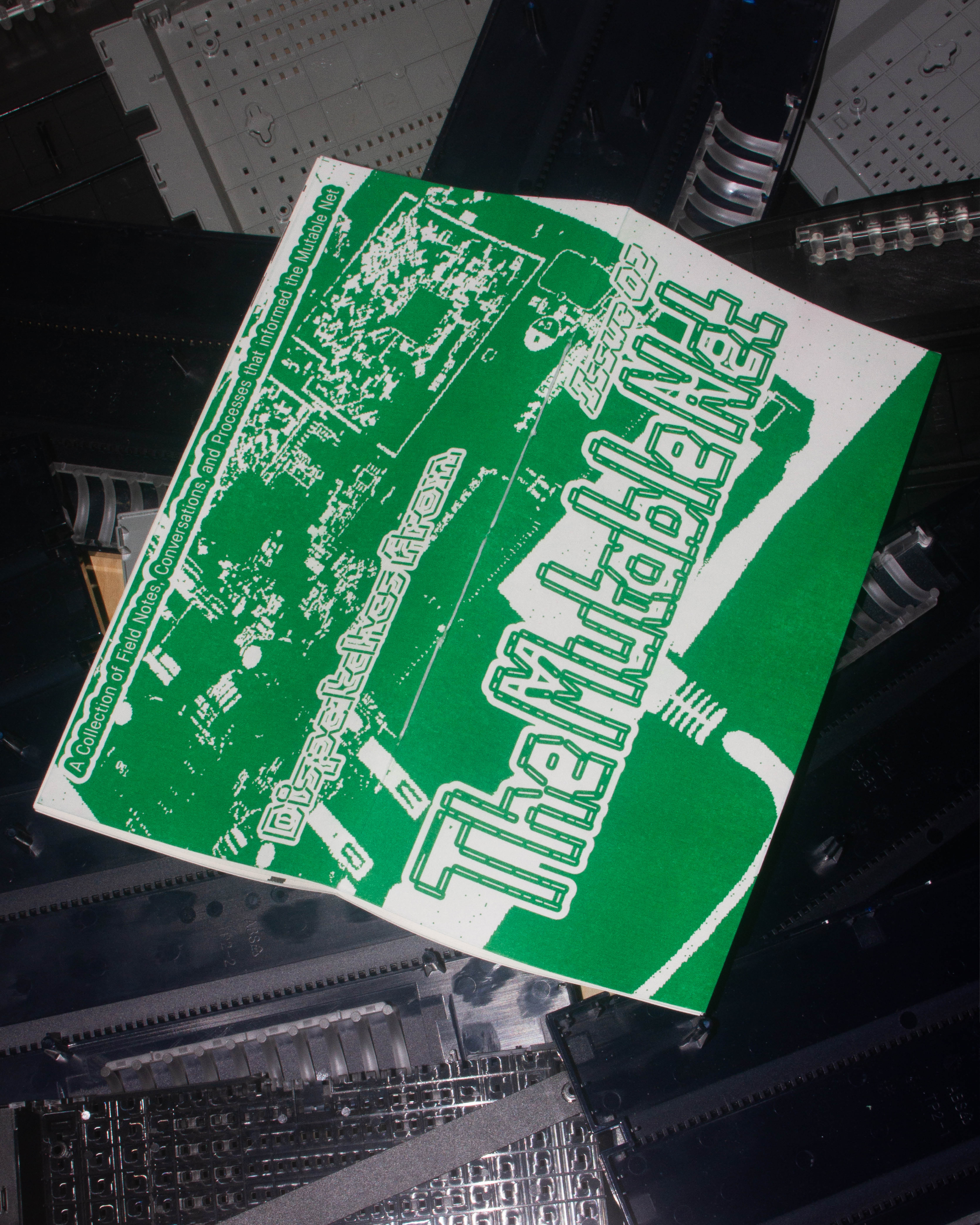
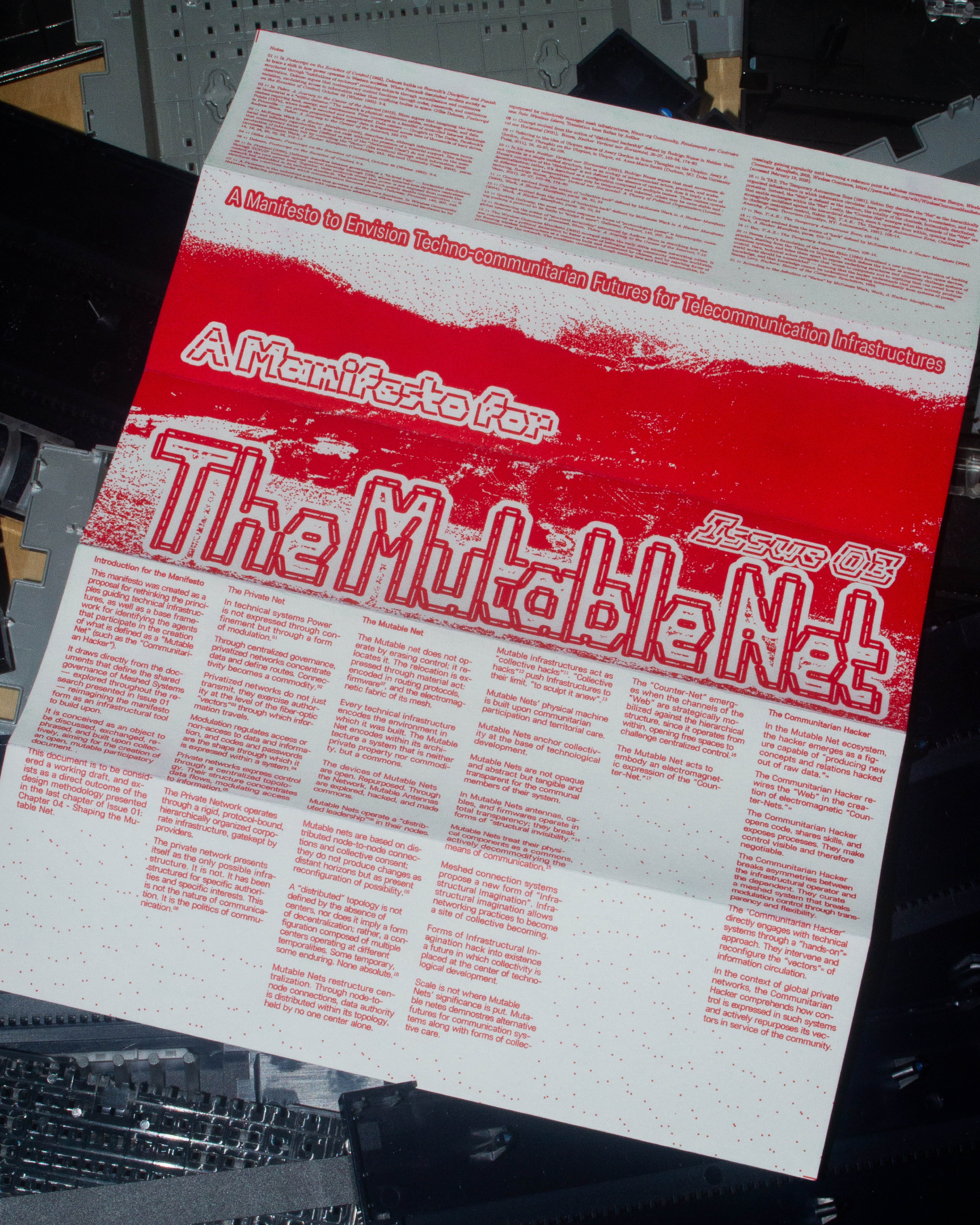
"The Mutable Net" is a zine series born as a container of knowledge on alternative telecommunication systems and the practice of Wireless Community Networks, whose design is inspired by counter-informative Italian hacktivist traditions. Issue 01 — The Mutable Net: A Distributed Topology Against Infrastructural Sovereignty — is a research exploring bottom-up mesh networking practices, and how these experiences open new ways of imagining connectivity as a commons, built on peer governance, shared technical literacy, and collective ownership. Moving from the Italian hacktivist traditions of the 1980s to situated mesh network experiences, the research explores how communities encode collective values into the very architecture of their networks — distributing power instead of concentrating it. Issue 02 — Dispatches from The Mutable Net — is a collection of conversations with hacktivists, libre network software developers, and researchers involved in the creation of Community Networks. Issue 03 — A Manifesto for The Mutable Net — was created as a proposal for rethinking the principles guiding technical infrastructures, and as a base framework for identifying the agents that participate in the creation of what is defined as a "Mutable Net".
The Mutable Net: a Distributed Topology Against Infrastructural Sovereignty
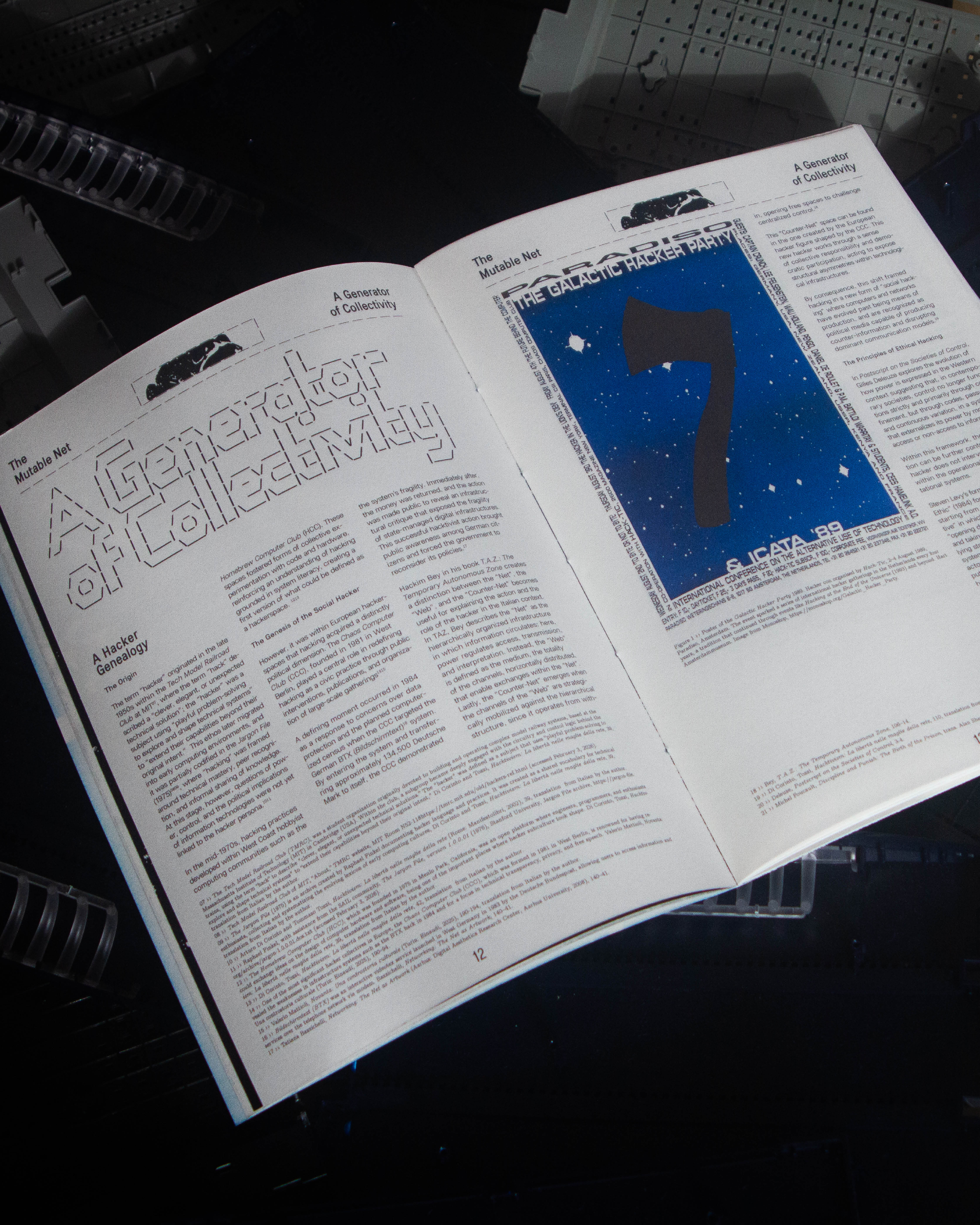
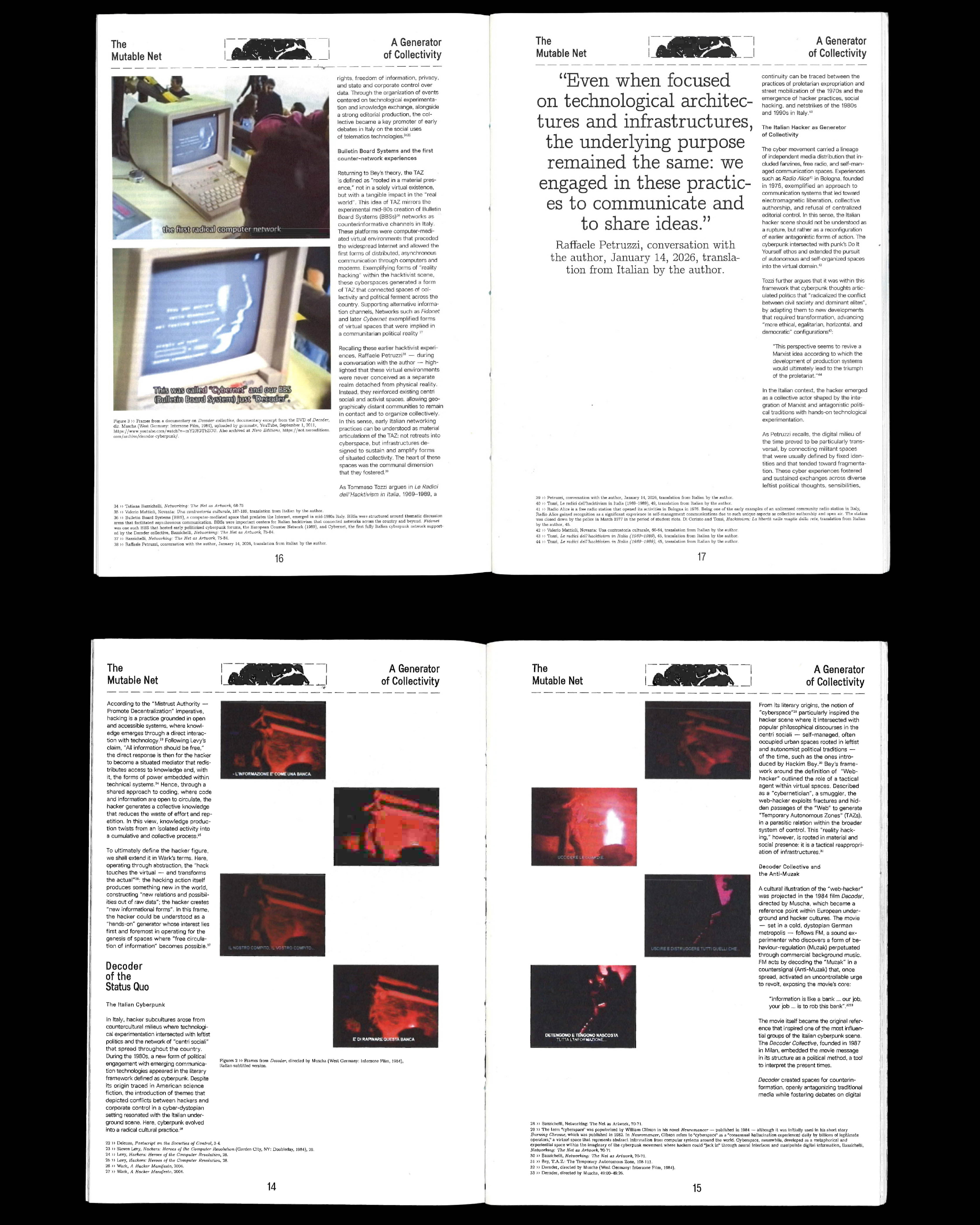
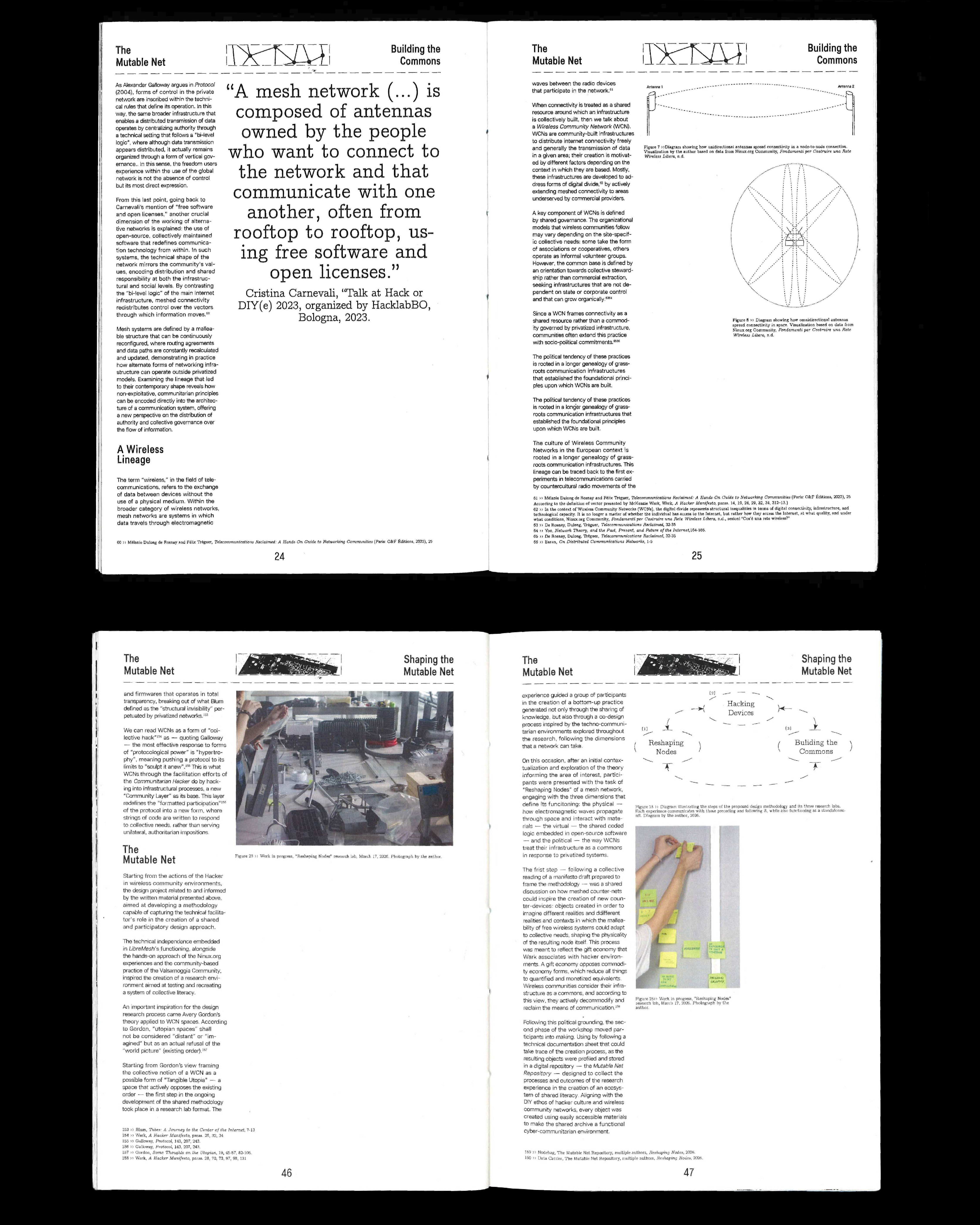
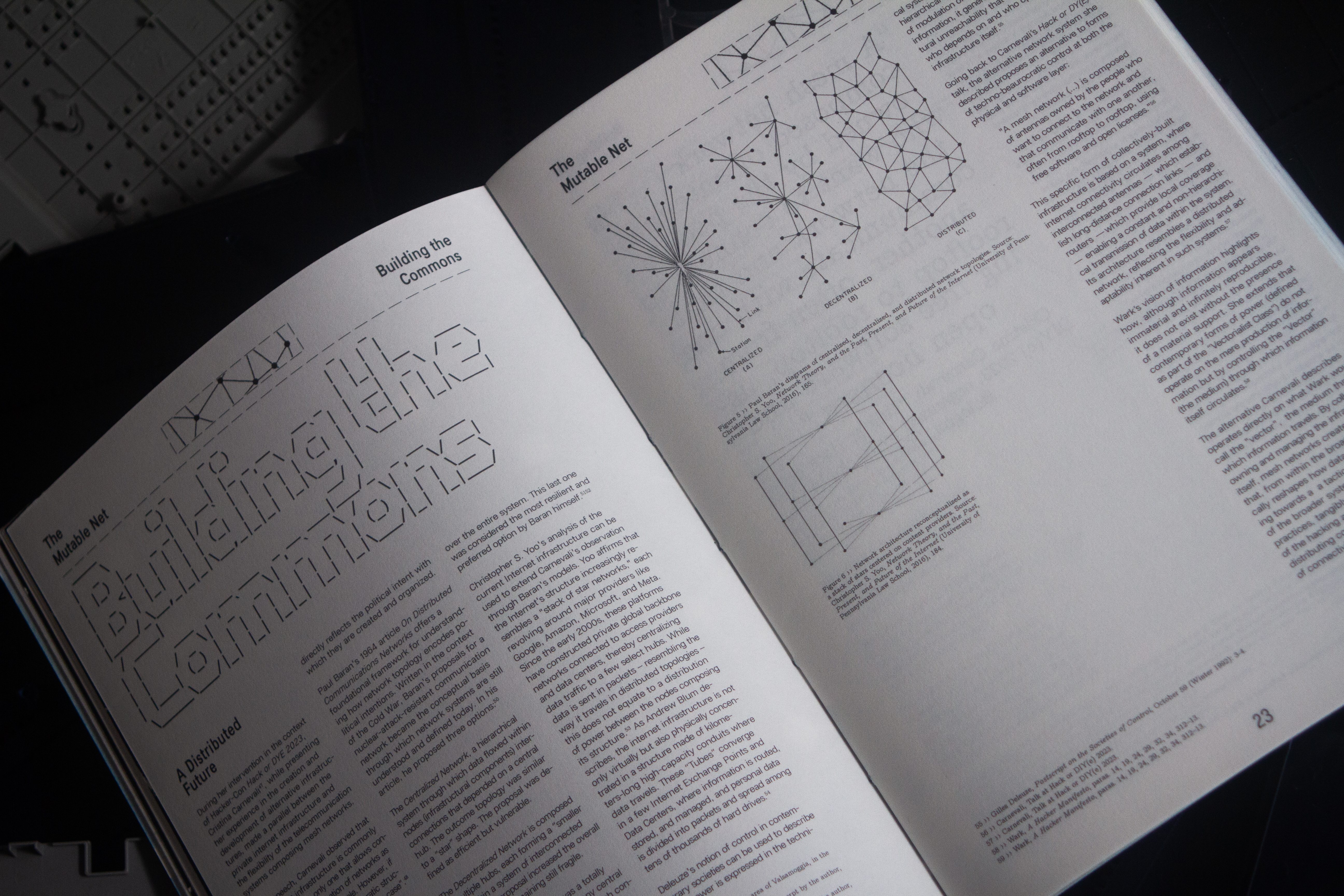
The contemporary global network, defined as the Internet, could be broadly described as a seemingly open and democratic system. However, by exploring its structure, we could witness a privatization of the medium through which data travels. This process is reflected in the way power over the flow of data concentrates in a few hubs: corporate-owned spaces that define the circulation, storage, and accessibility of data, creating an asymmetry between who accesses technical systems and who governs them. Practices of autonomous networking, instead, depart from this privatized model; the case of Wireless Community Networks (WCNs) is explained as an infrastructural ecosystem defined by distributed ownership and decentralized coordination. Through agreements and peer governance, WCNs encode at both the physical and virtual layers collective needs and ideals based on the non-hierarchical flow of data. In these contexts, the figure of the hacker becomes a pivotal mediator in the creation of accessible systems based on shared literacy by developing technical knowledge expressed in the form of a hack. The hacking action encodes within bottom-up technical systems principles of mutable governance and collective vision. In this context, the community stands at the core of a newly created system: Instead of concentrating power, they design infrastructures that distribute it. Within the Italian context, this dynamic becomes particularly visible in the development of Ninux Community Network (NCN) (2002), whose shape was directly influenced by the communitarian and leftist traditions that marked the country’s hackerspaces since the 1980s. NCN exemplifies a highly politically oriented view on alternative telecommunications by depicting them as a common good. The case study of this research is located in the Apennine area south of Bologna (Italy): the community network, which operates in the small town of Prunarolo, exemplifies a new dimension for technical systems. Defined by a strong local communitarian context, this situated mesh network exemplifies an environment in which connectivity infrastructures are grounded in territorial maintenance and collaborative governance. The situated WCN actively demonstrates how forms of collective technological development can repurpose a technical architecture into a generator of collectivity. Ultimately, such mesh network infrastructures introduce a new way of imagining connectivity structures, as well as new forms of social organisation grounded in collective knowledge, shared practices, technological experimentation, and renewed relationships between communities and the technologies of connection. Collectively built networks open up the possibility of envisioning a future in which communities reclaim and actively reshape their own technological environments, transforming the conditions of connectivity and redefining their relationship with information technologies at its very foundations. This publication, in its printed matter, has been thought of as an informative device: a malleable, movable, and mutable object designed to be distributed, aiming at mirroring the core values of the technical infrastructures it analyzes. Its layout references the Italian hacker and cyberpunk counter-informative zines of the 1980s and 1990s, with the work developed by Decoder Collective as its primary visual reference (all of which are referenced and contextualized in the written text). Accordingly, it features inserts that are not integral parts of the thesis itself, but rather collateral outputs generated during a design process that developed in dialogue with the written research, each informing the other, merging theoretical inquiry with a design methodology. For this reason, the publication follows a three-column layout throughout the whole book and a highly contrasted use of images in the sections outside the core narrative of the thesis, in order to keep archival, documentary, and research visual material accessible and legible. Written and designed by Luca Marini